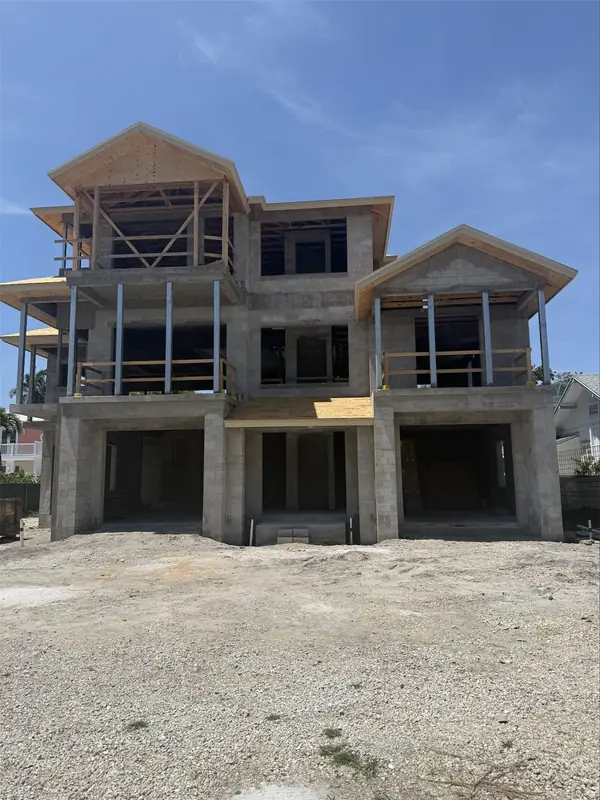
Most people think buying an existing home is the safe, easy choice. And in some cases, it is. But if you already own a lot, or you're thinking about buying one, building your custom home in Florida might be one of the smartest financial moves you can make.
Building on your lot gives you more control over the plan, specifications, and finished home, but it also introduces site, permitting, financing, schedule, and appraisal variables that do not exist in the same way with a completed resale home.
Let's break down exactly how this works.
When you buy an existing home, you can inspect a completed property and compare its asking price with recent sales. When you build, your total investment develops over time from the lot, plans, construction scope, selections, financing, fees, and site conditions.
But when you build on your own lot, the math changes completely. You're paying for:
Those inputs can create a home that appraises above, near, or below the total project investment. The completed value is determined by an independent appraiser using comparable sales, location, condition, features, and market evidence, not by construction cost alone.
Building and buying are two different risk profiles. A resale home offers a known structure and current market price; a custom build offers greater control but requires disciplined budgeting, site due diligence, lender review, and an after completion appraisal.
Consider this illustrative planning scenario for a 2,000 sq ft home in the Orlando area. It is not a quote, loan decision, or appraisal.
If the completed appraisal exceeds the total project investment, the difference may represent equity. The appraisal may also be equal to or below the investment, and lenders may treat cost, value, and contributed land differently.
*The shared range uses BuilderK's Central Florida Standard tier assumptions, 150 square feet of covered outdoor space, a 440 square foot two car garage, and typical design complexity, last updated July 18, 2026. See the calculator for exclusions.
An appraiser typically considers comparable recent sales and adjusts for location, size, condition, quality, features, market conditions, and other supported differences. Construction cost is relevant evidence, but it does not guarantee the final opinion of value.
| Factor | Build on Your Lot | Buy Existing Home |
|---|---|---|
| Purchase price | Cost + builder margin | Full market price |
| Equity at completion | Depends on total investment and the independent appraisal | Depends on purchase price, appraisal, and down payment |
| Customization | 100%, your design | Limited, renovate later |
| Building code | Latest Florida code | Code at time of original build |
| Hurricane resistance | Engineered for current wind loads | May need retrofitting |
| Insurance cost | Quoted by the carrier using the completed home and mitigation documentation | Quoted by the carrier using the home's age, systems, inspections, and coverage |
| Warranty | BuilderK one year workmanship and materials warranty; other protections vary | Seller, manufacturer, and optional home warranty coverage vary |
| Energy efficiency | Modern insulation, HVAC, windows | Older systems, higher bills |
| Maintenance costs (Year 1 to 5) | Minimal, everything is new | Roof, AC, appliance repairs likely |
| Bidding wars | None | Common in FL market |
| Timeline | 8 to 14 months | 30 to 60 days to close |
Buying an existing home is usually faster. Building can be a better fit when you have time for design, approvals, and construction and want more control over the finished home.
One of the biggest obstacles people face when building is the equity requirement. If you own your lot, its appraised equity may reduce or replace the cash down payment required by a lender, depending on total project cost, borrower qualifications, appraisal, and loan program.
In some programs, sufficient appraised lot equity may reduce or replace a cash down payment. A lender may still require cash for closing costs, reserves, appraisal shortfalls, or specific to the loan program items.
Suppose a lot appraises at $80,000 and the total project cost is $410,000. The lender may consider that lot equity when calculating the funds required from the borrower.
The lender still reviews the appraisal, total project cost, borrower qualifications, reserves, and loan program before deciding how much cash is required.
That's OK. Many construction loans can include lot purchase as part of the financing. You can buy the land and build the home with a single loan. Talk to us and we'll connect you with lenders who specialize in this.
In Florida, insurance is a huge deal, and this is where new construction really shines compared to buying existing.
Current code construction and documented wind mitigation features may affect carrier eligibility or discounts. Premiums and savings vary by location, home, roof and opening protection, coverage, inspection results, and insurer; obtain specific to the property quotes before relying on a budget.
When you buy an existing home, the day you close is the day everything becomes your problem. That 12 year old AC unit? Yours. The aging water heater? Yours. The roof that has 5 years left? All yours.
BuilderK includes a one year builder warranty covering workmanship and materials, in addition to applicable manufacturer and structural protections. The written construction agreement and warranty documents control the actual coverage, terms, and exclusions.
Florida's building code has been updated multiple times since most existing homes were built, especially after major hurricane seasons. A new home built in 2026 is engineered for current wind loads, uses hurricane straps, impact rated openings, and meets the latest energy efficiency standards. An older home might technically be "up to code" for when it was built, but that code could be decades old.
This one's obvious but worth saying: when you build, you get YOUR home. Not someone else's idea of a home that you then spend $50,000+ renovating to make it work for you.
Many buyers renovate soon after closing. It is worth comparing that renovation budget with the cost of building a home around your needs from the start.
Florida still offers opportunities to build on land you already own or plan to purchase.
Unlike markets in the Northeast or California where buildable lots are nearly impossible to find, Florida still has available land, especially in growing areas around Orlando, Tampa, Jacksonville, Space Coast, and Southwest Florida. Lots in these areas range from $30,000 to $150,000+ depending on location and size.
Florida continues to attract new residents, which can support housing demand. Future appreciation still depends on the local market and is never guaranteed.
Building avoids bidding on an existing home and gives you more control over design. Final price and schedule still depend on site conditions, selections, permits, approved changes, material availability, and the construction contract.
Florida insurance can be expensive, especially for older homes. New construction may include features that insurers consider, but quotes still vary by home, location, coverage, and carrier.
Compare the complete picture, including the lot, site costs, financing, schedule, customization, code requirements, warranty coverage, and the lender's appraisal after completion. Building can be the better fit, but the financial result depends on the project and the market.

If building on your lot feels like the right direction, these are the next steps:
BuilderK's calculator provides one combined Central Florida planning range based on the home and feature selections you enter. A formal proposal follows plan, scope, and site review.
Plan your build: try our cost calculator, browse floor plans, or learn how construction financing works.
Whether you already have land or you're looking, we'll help you understand your options and what a custom home may cost and how lenders evaluate its value.
Build a Planning Range →Published March 7, 2026 · BuilderK, Builders Knowledge Development Inc. · CGC #1537163 · Orlando, FL